





Surfside, Fla. — As some paramedics and EMTs from Hatzalah of South Florida raced to the scene of a building collapse in the city of Surfside early Thursday morning, their thoughts turned to a place 5,600 miles away, specifically Israel, where two years ago they trained for this very scenario.
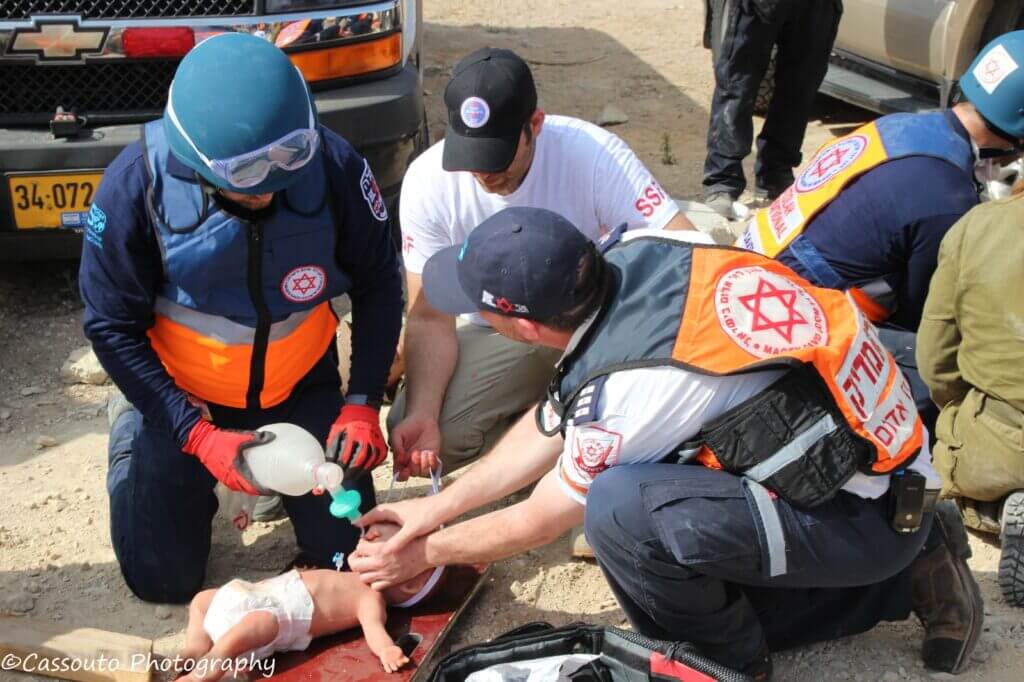
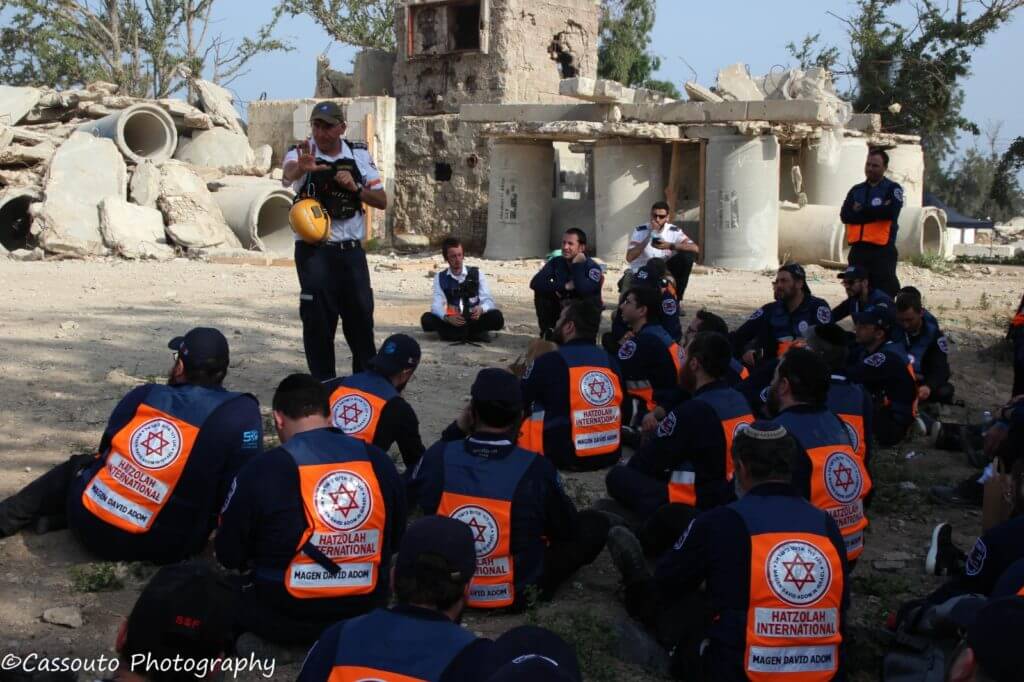
In May 2019, members of Hatzalah EMS organizations from around the world converged on Israel for training with Magen David Adom (MDA) and the IDF Search and Rescue Unit. The hands-on training included intensive drills for responding to building collapses, replete with the need to pull volunteer actors from rubble to best simulate what would actually happen when people are trapped in debris.
“The training we had in Israel with Magen David Adom and the Israel Defense Forces gave us a level of confidence to face a situation we’ve never seen before in reality,” said Andre Roitman, a volunteer EMT with Hatzalah of South Florida. “MDA’s support and their partnership has meant that any time we need it, we can call them and within minutes we have a response.”
So far, only two survivors have been pulled from the rubble of the 12-story building, and one of them subsequently died at a local hospital. The cause of the collapse, which brought down about two-thirds of the structure, has still not been determined.
Should others be found alive, however, the process for getting them out unharmed is by no means simple, Magen David Adom says. “Extracting people from collapsed buildings without further injuring them or contributing to their death is an extremely complex process,” says Felix Lotan, a paramedic and head of disaster response for Magen David Adom. As coincidence would have it, Lotan is actually in the U.S. now sharing knowledge with the U.S. National Guard and other army and civilian units regarding responding to disasters.
After lying in rubble for more than 60 minutes, muscle tissue deprived of blood circulation from the weight of debris leaches electrolytes and other toxins that can cause renal or heart failure as the patient is extracted and the circulation restored once the weight is off them.
Ideally, Lotan explained, if there’s no immediate threat to their life, survivors should be administered a liter of IV saline solution — and as much as three liters if they’ve been trapped for many hours — before they’re pulled from the rubble to protect against those complications. Good coordination between the EMTs on site and the search-and-rescue units, whose job it is to extract people from the rubble, greatly increases the chances of survival, he said.
About 40 members of Hatzalah of South Florida joined Lotan for a review of those procedures on a Zoom meeting today should they be involved in treating any additional survivors found at the scene.
In addition to Roitman, two other Hatzalah of South Florida volunteers took the training in 2019. Another volunteer, paramedic Michael Strongin, actually worked for MDA for several years before coming back to the United States, but will be returning to Israel and his role at MDA next year. He was one of the first on the scene.
“Half the building is missing and you can see in detail the life and homes of people who lived in the building, including couches hanging over the precipice of what was once their living room,” Strongin said earlier today.
“I’m very glad we had that initial relationship [with Magen David Adom] and have been able to build on that,” said Roitman. “I’m looking forward to continuing that relationship and helping our communities. It’s humbling to see people getting together to do whatever they can to help.”

