





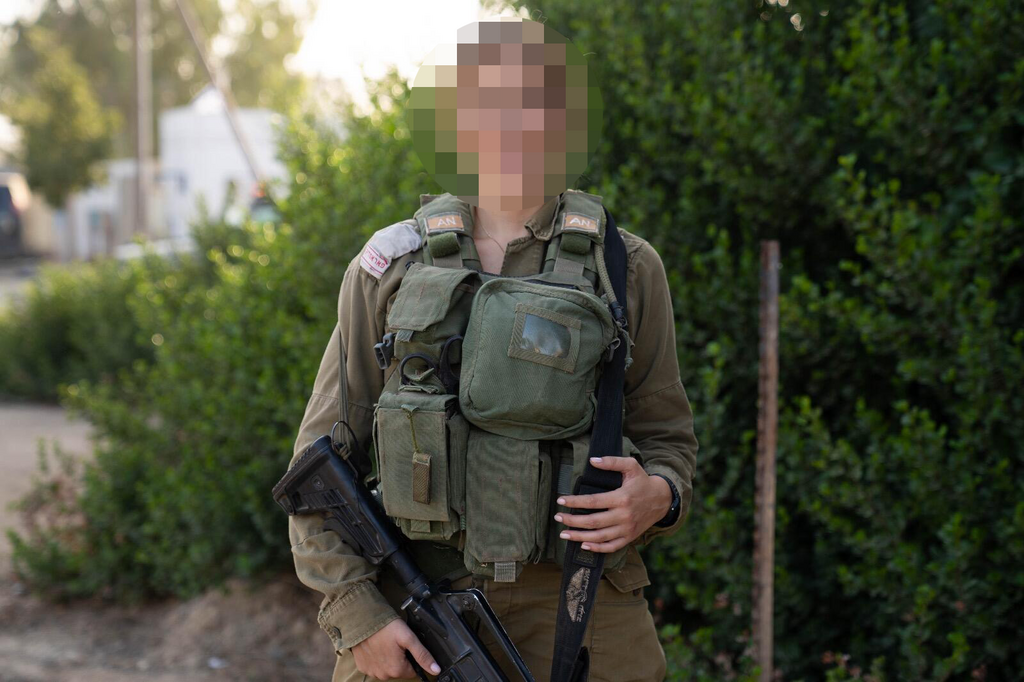
Magen David Adom paramedic A. recounts the moments she found herself in the horror of Hamas’ attack and her efforts to save as many lives as she could.

A., a 26-year-old Magen David Adom (MDA) paramedic in reserve duty, made Aliyah to Israel from France 18 years ago. On the fateful Saturday of October 7, she found herself in the midst of the inferno, walking into the fire with her ambulance team. By the afternoon of that day, she was already drafted into the reserves and has since been steadfast in her determination to continue the fight.
A., having just completed a night shift as a paramedic at MDA, found herself thrust into action when red alarms blared on the Black Saturday of October 7th. Recounting the unfolding events, she says, “I had just finished my shift at the call center when reports of casualties came in”. Directed by MDA headquarters, she was instructed to join the paramedic driver in a bullet-proof ambulance, heading toward the south.
“By around 8:30, reception disturbances had begun, and it was only through the ambulance connection that we learned about the extensive shooting in Sderot”. Together with her driver, they hurried to the scene, becoming the sole medical presence in the vicinity for the next several hours, until the southbound lane closure was lifted.
“We were speeding toward Sderot when terrorists on the road opened fire, and we encountered lifeless bodies all across the road. We grasped that we were dealing with a situation involving numerous casualties, but I had yet to comprehend the full scale of the event, nor could I even imagine what was about to unfold.”
“This place, once a city, had transformed into a bloody arena. Strangely, the driver and I initially thought the attack was concentrated solely on Sderot, as we were out of communication and unaware that the mass violence extended across the entire southern sector”.
“I worked like a robot, not feeling hungry or thirsty but staying focused on the goal: saving lives and treating as many casualties as possible. It was just the driver and me providing medical attention when the sounds of gunfire passed by our ears”.
She recounts the initial hours of the murderous chaos that engulfed the area. “At the outset, I tended to gunshot victims among the IDF, police officers, and soldiers. It was only later that I had the opportunity to extend my care to civilians”.
Engaged in a multitude of tasks, she disinfected, cleaned, and dressed wounds, secured artery tourniquets, administered transfusions, blood, and plasma, dispensed medication, and efficiently loaded as many casualties as possible onto each ambulance, ensuring their connection to those awaiting outside the danger zone.
“Throughout the entire day, we kept shuttling back and forth, and the most shocking part was that each time we retraced our steps on the same road, we encountered an increasing number of bodies piling up. It’s unbelievable what happened there”, she remarks.
“The supplies from my personal bag and the ambulance ran out quickly, so we had to replenish from the ambulances waiting for the road to open. We took dressings, transfusions, plasma, syringes, vein-opening tools, blood clotting medications, oxygen, and more. That’s how we managed to restock all the equipment that had run out at an astonishing speed.”
She didn’t take a break, feeling neither tiredness nor fear. “I kept functioning as usual. I don’t even remember being called to the incident after working all night without sleep. I worked like a robot, not feeling hungry or thirsty but staying focused on the goal: saving lives and treating as many casualties as possible. It was just the driver and me providing medical attention when the sounds of gunfire passed by our ears”.

